Ever heard someone say, He looked completely despondent after the interview and wondered what that actually means
The despondent meaning is more emotional than just sad. It describes a deep feeling of discouragement the kind that hits when things go wrong and hope starts to fade.
Maybe you didn’t get the job you wanted. Maybe an important plan failed. That sinking, defeated feeling That’s exactly where the word despondent comes in.
Understanding words like this matters more than you might think. They appear in books, news articles, academic writing, and even everyday conversations.
gnize and use despondent confidently in both writing and conversation.
What Does “Despondent” Mean?
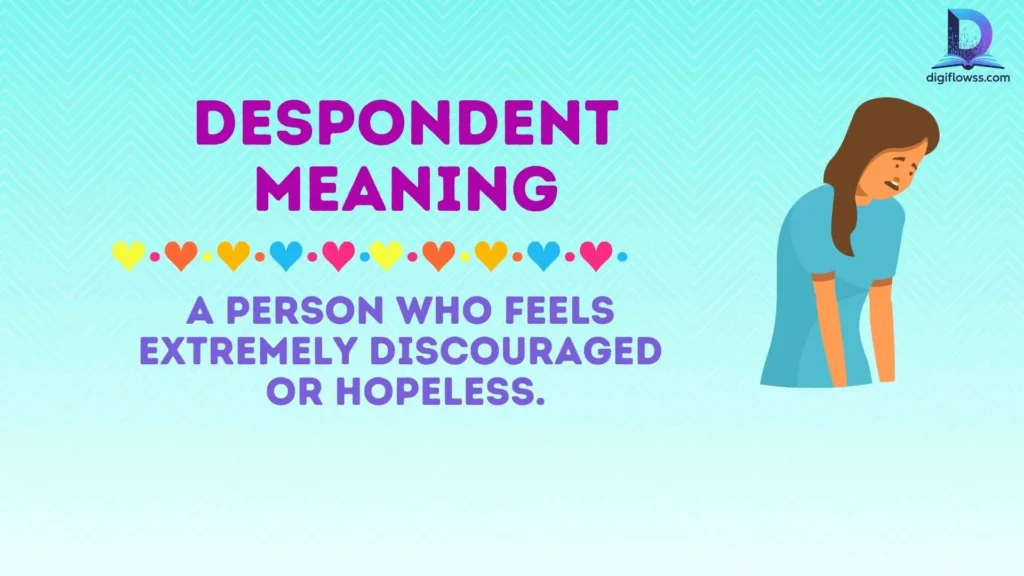
The word despondent describes a person who feels extremely discouraged or hopeless.
Someone who is despondent often believes that things will not improve.
Quick Answer:
Despondent means feeling deeply discouraged, hopeless, or disheartened—usually after disappointment, failure, or ongoing difficulties.
Simple Definition
Despondent (adjective):
Feeling a loss of hope, courage, or confidence.
Pronunciation
di-SPON-duhnt
Phonetic: /dɪˈspɒn.dənt/
Word Origin
The term comes from the Latin word despondere, which means “to give up hope.”
Historically, it entered English in the 17th century and has been used to describe emotional despair or strong discouragement.
Evolution of Meaning
While the original meaning focused on hopelessness, today the word is commonly used to describe:
- Emotional defeat
- Severe discouragement
- Loss of optimism after setbacks
For example:
- Losing a job
- Failing an exam
- Experiencing repeated rejection
All can make someone feel despondent.
How to Use “Despondent” Correctly in Sentences
The word despondent is typically used to describe a person’s emotional state.
It often appears after experiences like failure, disappointment, or loss.
Common Sentence Structure
- Someone feels despondent
- Someone becomes despondent
- Someone looks despondent
Examples:
- She felt despondent after hearing the bad news.
- The team grew despondent after losing three games in a row.
- He looked despondent when his project was rejected.
Tone and Context
The word carries a serious and emotional tone.
It’s stronger than words like:
- sad
- upset
- disappointed
But slightly lighter than:
- devastated
- heartbroken
When NOT to Use It
Avoid using despondent for small or trivial disappointments.
❌ “I felt despondent because my coffee was cold.”
✔ “He felt despondent after months of job rejections.”
Writing Tip
The word often appears in:
- literature
- academic writing
- news articles
- emotional storytelling
Real Conversation Examples Using “Despondent”
Below are natural examples that show how the word works in real life.
Example 1 – After a Job Interview
Friend: “How did the interview go?”
Alex: “Not great. I feel really despondent about it.”
Meaning: Alex feels discouraged and pessimistic about his chances.
Example 2 – Student Situation
Teacher: “Why are you so quiet today?”
Student: “I’m feeling despondent after failing the test.”
Meaning: The student feels defeated and hopeless.
Example 3 – Sports Context
Commentator: “The players looked despondent after conceding the final goal.”
Meaning: The team lost hope and morale.
Example 4 – Personal Life
Friend 1: “She seemed really despondent after the breakup.”
Friend 2: “Yeah, she’s having a hard time moving on.”
Meaning: She feels emotionally discouraged.
Example 5 – Workplace Example
Manager: “Don’t feel despondent about the project delay. We’ll fix it.”
Meaning: Encouraging someone not to lose hope.
Common Mistakes & Misunderstandings
Many people misunderstand the despondent meaning or use it incorrectly.
Here are the most common mistakes.
1. Confusing Despondent With Depressed
These words are related but not identical.
Despondent
- Emotional discouragement
- Usually temporary
- Caused by setbacks
Depressed
- Clinical mental health condition
- Long-term symptoms
- Requires professional diagnosis
2. Using It for Minor Problems
The word describes serious discouragement, not small frustrations.
❌ “I’m despondent because my phone battery died.”
3. Mispronouncing the Word
Many people say:
❌ des-PON-dent
Correct pronunciation:
✔ di-SPON-duhnt
“Despondent” Across Different Contexts
In Literature
Authors often use despondent to show emotional depth.
Example:
“He sat alone, despondent and silent, staring at the empty road.”
In News Writing
Journalists use the word to describe emotional reactions.
Example:
- “Farmers grew despondent after another year of drought.”
In Everyday Speech
While the word is slightly formal, educated speakers use it in conversation.
However, casual alternatives like “discouraged” or “down” appear more often in everyday talk.
Formal vs Informal
| Context | Appropriate? |
|---|---|
| Academic writing | ✔ Yes |
| Literature | ✔ Yes |
| Professional communication | ✔ Sometimes |
| Casual conversation | ✔ Occasionally |
| Text slang | ❌ Rare |
Related Words, Synonyms & Alternatives
Here are common alternatives related to the despondent meaning.
| Word | Meaning |
|---|---|
| Discouraged | Losing confidence or hope |
| Downhearted | Feeling unhappy and pessimistic |
| Hopeless | Believing nothing will improve |
| Disheartened | Losing motivation or enthusiasm |
| Gloomy | Sad and pessimistic |
| Dejected | Feeling sad after disappointment |
| Crestfallen | Embarrassed and disappointed |
| Melancholy | Deep thoughtful sadness |
| Defeated | Feeling like you cannot succeed |
These words may carry slightly different emotional intensities.
FAQs:
What does despondent mean emotionally?
Emotionally, despondent describes a strong feeling of discouragement and hopelessness. A despondent person often believes their situation will not improve, especially after repeated disappointments.
Can someone be despondent temporarily?
Yes. Despondency is often temporary and triggered by specific events like job loss, exam failure, or relationship problems.
Is despondent a negative word?
Yes. It has a negative emotional tone because it describes sadness, discouragement, and loss of hope.
What is the difference between sad and despondent?
Sadness can be mild or temporary, but despondent implies deeper discouragement and emotional defeat.
What part of speech is despondent?
Despondent is an adjective. It describes a person’s emotional state.
Example:
“She felt despondent after the rejection.”
Conclusion:
The despondent meaning centers on a powerful emotional state: deep discouragement and loss of hope. It’s stronger than everyday sadness and often appears after major setbacks or disappointments.
You’ll commonly see the word in literature, news writing, and thoughtful conversations where emotions run deep.
Understanding words like despondent improves both your vocabulary and your ability to express complex emotions clearly.
Next time someone looks defeated after bad news, you’ll recognize exactly what that feeling might be: despondency.
And now you know how to use the word correctly.

Hi, I’m Candy Mark, the voice behind Digiflowss.com, where confusing words get clarity and trending slang finally makes sense.
I write for people who don’t have time for complicated definitions. If a word is blowing up online or showing up in conversations and you’re not 100% sure what it means, I break it down fast, simple, and in a way that actually sticks.