Imagine texting your boss, replying to a teacher, or responding to a customer and you type Yes ma’am.
Simple, right But depending on who you ask, that phrase can signal respect, politeness, obedience, or even playful sarcasm.
Understanding the yes ma’am meaning is more important than you might think. Language on the internet evolves fast, and phrases that once belonged only to formal speech now appear in texts, memes, and group chats.
Some people use it daily. Others think it sounds overly formal or even awkward. So what does it actually mean, and when should you use it?
“yes ma’am” sounds respectful and when it might sound strange.
What Does “Yes Ma’am” Mean?
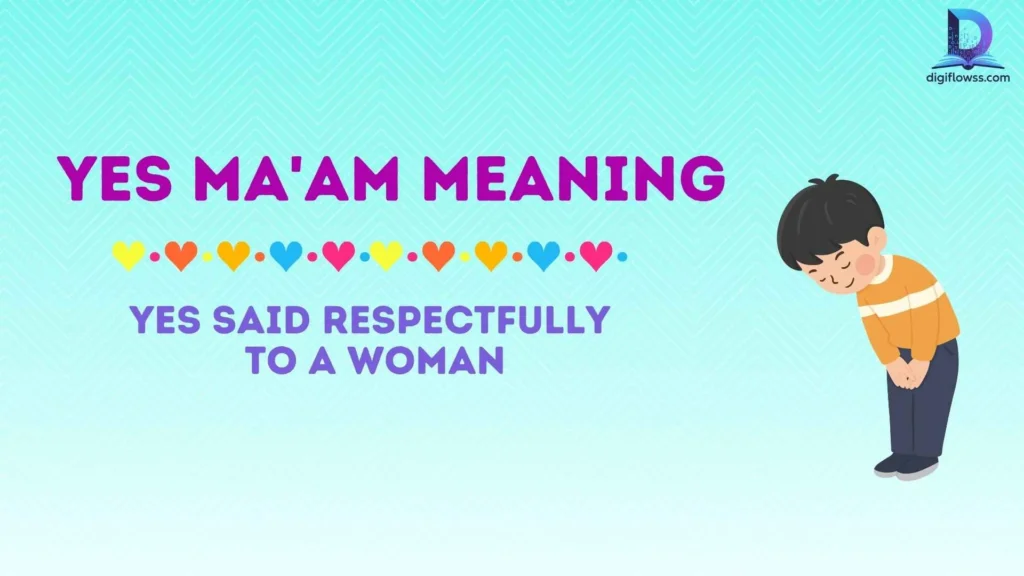
The phrase “yes ma’am” is a polite response used to show respect, agreement, or acknowledgment when speaking to a woman.
It usually appears in situations where someone is responding to a request, instruction, or question.
Quick Answer:
“Yes ma’am” means “yes” said respectfully to a woman, typically used in formal, polite, or hierarchical situations.
Origin of the Phrase
“Ma’am” comes from “madam,” a respectful title historically used for women of authority or social status.
Over time, English speakers shortened “madam” → “ma’am.”
The phrase became especially common in:
- The Southern United States
- Military communication
- Customer service
- School environments
In many Southern households, children are taught to respond with “yes ma’am” and “no ma’am” as a basic sign of manners.
Pronunciation
The phrase is typically pronounced:
/yes mam/
Not “may-am.”
It sounds like “mam.”
How to Use “Yes Ma’am” Correctly in Texts & Chat
Although the phrase originated in spoken language, it’s now common in digital communication too.
Tone and Context
“Yes ma’am” usually conveys:
- Respect
- Politeness
- Obedience
- Formal acknowledgment
Sometimes it can also be playful or joking, especially among friends.
Platform-Specific Usage
SMS / WhatsApp
Used to confirm instructions or show politeness.
Example:
“Got it, yes ma’am.”
Instagram DMs
Often playful or flirtatious.
Example:
“Yes ma’am, I’ll bring the snacks 😄”
Discord / Gaming Chats
Sometimes used humorously when someone acts bossy.
Example:
“Yes ma’am captain!”
Twitter/X Comments
Can be sarcastic or supportive depending on context.
When NOT to Use It
Avoid using “yes ma’am” when:
- The person dislikes formal language
- You’re speaking to someone younger who might feel uncomfortable
- In ultra-casual friend groups where it sounds stiff
Context always matters.
Formatting Tips
Common variations include:
- Yes ma’am
- Yes, ma’am
- Yes maam (casual texting)
- yes ma’am 🙂
Emoji pairings often include:
👍 🙂 😅 🙏
Real Conversation Examples Using “Yes Ma’am”
Example 1 — Between Friends
Friend: Did you finish the assignment?
You: Yes ma’am, turned it in this morning.
Meaning: Lighthearted respect or playful tone.
Example 2 — Customer Service
Customer: Can you check the order status for me?
Employee: Yes ma’am, I’ll look that up right away.
Meaning: Professional politeness.
Example 3 — Family Conversation
Mom: Please clean your room before dinner.
Teen: Yes ma’am.
Meaning: Obedience or acknowledgment.
Example 4 — Flirty Text
Partner: Pick me up at 7 sharp.
You: Yes ma’am 😌
Meaning: Playful compliance.
Example 5 — Gaming Chat
Team Leader: Everyone drop at the north base.
Player: Yes ma’am captain!
Meaning: Humorous respect.
Common Mistakes & Misunderstandings
Even simple phrases get misinterpreted online.
Here are the most common mistakes.
1. Thinking It’s Always Formal
Many younger users assume “yes ma’am” is strictly formal.
In reality, people often use it jokingly with friends.
2. Using It With Someone Who Feels Old
Some women dislike being called ma’am because it makes them feel older.
In casual settings, “yes” or “got it” might be safer.
3. Cultural Differences
In some regions (especially the U.S. South), not saying “ma’am” can sound rude.
In other places, it may feel unnecessary or overly formal.
4. Misreading Sarcasm
Online tone is tricky.
“yes ma’am…” can sometimes mean:
“fine, whatever you say.”
Context matters.
“Yes Ma’am” Across Different Platforms & Demographics
Gen Z Usage
Gen Z often uses the phrase ironically or humorously, especially in memes.
Example:
“Yes ma’am I will absolutely do nothing.”
Millennials
Millennials tend to use it:
- Professionally
- In customer service
- When texting older relatives
Older Generations
For many older adults, especially in the South, “yes ma’am” is basic etiquette.
Children are taught it early.
Platform Trends
TikTok comments
Often used jokingly.
Instagram captions
Sometimes flirtatious.
Discord servers
Used ironically in gaming culture.
Related Slang, Abbreviations & Alternatives
Here are common alternatives to “yes ma’am.”
| Expression | Meaning |
|---|---|
| Yes sir | Respectful response to a man |
| Got it | Casual acknowledgment |
| Roger that | Military-style confirmation |
| Copy that | Means message received |
| Sure thing | Friendly agreement |
| Absolutely | Enthusiastic confirmation |
| No problem | Casual agreement |
| Yup | Informal yes |
| Bet | Gen Z slang for agreement |
FAQs:
Is saying “yes ma’am” polite?
Yes. In many English-speaking cultures, the phrase signals politeness and respect when addressing a woman.
What does “yes ma’am” mean in texting?
In texting, yes ma’am usually means respectful agreement. Depending on tone, it can also be playful or humorous.
Is “ma’am” rude?
No. However, some people dislike the term because it can imply age. Context and regional culture influence how it’s perceived.
Why do people in the South say yes ma’am?
Southern culture places strong emphasis on manners and respect. Children are often taught to respond to adults with yes ma’am and no ma’am.
Can you say yes ma’am to a young woman?
Yes, but some younger women may find it overly formal. In casual settings, simpler responses like “yes” or “sure” might feel more natural.
Conclusion:
The phrase yes ma’am meaning may seem simple, but its usage reveals a lot about culture, respect, and communication style.
At its core, “yes ma’am” is a polite way to acknowledge or agree with a woman. In traditional settings it shows respect, while online it can also be playful or humorous.
Whether you’re texting a friend, responding to a teacher, or working in customer service, knowing when to use the phrase helps you communicate more clearly and politely.
Language keeps evolving, but good manners never go out of style.
Got a favorite internet abbreviation or slang phrase? Drop it in the comments and let’s decode it next.

Hi, I’m Alex Mark, the writer and Creator behind digiflowss.com, where meanings aren’t just explained… they’re made easy to understand and actually useful.
I started this platform with one simple goal: to break down words, slang, and expressions in a way that feels clear, fast, and real. No complicated definitions. No textbook vibes. Just straight answers that help you understand what people really mean—online and in real life.