Ever had one of those days where nothing feels clear like you’re just going through the motions without a plan? That feeling has a word adrift meaning perfectly captures it.
Originally used to describe something floating freely in water, adrift has evolved into a powerful way to express emotional uncertainty, confusion, or lack of direction.
And in today’s fast-paced, always online world, more people than ever are using it in conversations, captions, and even personal reflections.
Updated for 2026, this guide breaks down everything you need to know about adrift meaning, from its literal roots to how people use it in real-life situations today.
By the end, you’ll not only understand the word you’ll know exactly how (and when) to use it like a pro.
What Does “Adrift” Mean
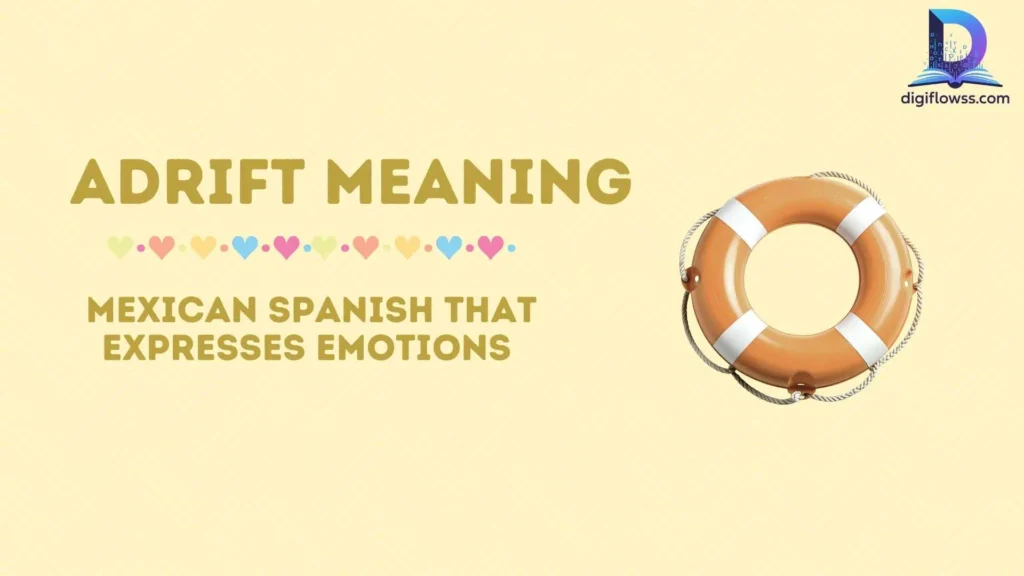
Adrift meaning is simple at its core: being without direction, control, or purpose.
It can describe:
- Something physically floating freely (like a boat lost at sea)
- A person feeling emotionally or mentally lost
Quick Answer:
Adrift means being without direction, control, or purpose — either physically (floating) or emotionally (feeling lost in life).
Origin of the Word
The word “adrift” comes from maritime language, dating back to the 16th century. Sailors used it to describe ships or objects that had broken free from anchors and were drifting in open water.
Over time, its meaning expanded into everyday language — especially to describe emotional states.
Evolution of Meaning
- Then: Literal — ships floating without control
- Now: Both literal and metaphorical — especially emotional confusion
Pronunciation
Adrift is pronounced as:
uh-DRIFT
How to Use “Adrift” Correctly in Texts & Chat
Using adrift meaning correctly depends on tone and context.
When to Use It
- Talking about feeling lost in life
- Describing uncertainty or lack of direction
- Writing creatively or emotionally
Example:
- “I’ve been feeling kind of adrift lately.”
Platform-Specific Usage
- WhatsApp/SMS: Personal feelings, deep chats
- Instagram captions: Reflective or poetic vibes
- Twitter/X: Emotional or philosophical posts
- Discord/Reddit: Storytelling or venting
When NOT to Use It
- Formal emails
- Professional business communication
- Technical writing
Formatting Tips
- Usually lowercase: adrift
- Often paired with emotional emojis: 🌊 😔 💭
- Works well in poetic or reflective sentences
Real Conversation Examples Using “Adrift”
Between Friends
A: “You okay these days?”
B: “Honestly, I feel a bit adrift.”
👉 Meaning: Feeling emotionally lost or unsure.
In a Relationship
Text: “Since we stopped talking, I’ve felt completely adrift.”
👉 Meaning: Emotional disconnection and confusion.
Family Context
Mom: “You seem quiet lately.”
You: “Just feeling adrift about my future.”
👉 Meaning: Uncertainty about life direction.
Work Chat (Casual)
Colleague: “How’s the new role?”
You: “Still a bit adrift, figuring things out.”
👉 Meaning: Adjusting and lacking clarity.
Gaming/Online Chat
Player: “Team’s all over the place lol we’re adrift.”
👉 Meaning: No coordination or direction.
Common Mistakes & Misunderstandings
1. Thinking It Only Means “Floating”
Many people assume adrift meaning is only literal. In reality, it’s more commonly used emotionally today.
2. Using It in Formal Situations
Saying “Our company strategy is adrift” might sound too informal or dramatic in professional contexts.
3. Confusing It With “Drifting”
While similar, “adrift” emphasizes lack of control, not just movement.
Generational Differences
- Gen Z: Uses it emotionally and poetically
- Millennials: Mix of literal and emotional
- Older generations: Mostly literal understanding
Cultural Differences
In some regions, “adrift” is more literary and less used in daily speech.
“Adrift” Across Different Platforms & Demographics
Gen Z Usage
Highly emotional and expressive:
- “Feeling adrift in life rn”
Millennials
Balanced usage:
- “Career-wise, I feel adrift”
Older Generations
More literal:
- “The boat was found adrift”
Platform Trends
- TikTok: Used in captions about life struggles
- Instagram: Aesthetic, poetic captions
- Discord: Casual emotional chats
Formality Level
- Informal to semi-formal
- Not suitable for strict professional writing
Related Slang, Abbreviations & Alternatives
Here are similar words and phrases you can use instead of adrift meaning:
- Lost — no direction or clarity
- Aimless — without purpose
- Wandering — moving without goal
- Confused — unsure or unclear
- Drifting — moving slowly without control
- Uncertain — lacking confidence in decisions
- Directionless — no clear path
- Floating — metaphorically relaxed or lost
- Disconnected — emotionally distant
FAQs:
What does adrift mean in life context?
It means feeling lost, unsure, or without a clear purpose in life. People often use it during transitions or uncertain periods.
Is adrift always negative?
Mostly yes, but not always. Sometimes it can suggest freedom or being open to possibilities without restrictions.
Can you use adrift in writing?
Absolutely. It’s commonly used in creative writing, storytelling, and emotional expression.
What is the opposite of adrift?
Words like “focused,” “grounded,” or “directed” are opposites of adrift.
Why do people say they feel adrift?
Usually because they’re going through change, uncertainty, or lack of clear goals.
Conclusion:
Adrift meaning goes far beyond its original use. What started as a nautical term has become a powerful way to describe one of the most human feelings being lost.
Whether you’re talking about emotions, life direction, or even chaotic situations, “adrift” captures that sense of uncertainty perfectly.
And now you know exactly how to use it naturally, confidently, and in the right context.
Feeling adrift isn’t unusual. But understanding the word? That’s a step toward clarity.
👉 Got a favorite word like this? Drop it below and let’s explore it next.

Hi, I’m Candy Mark, the voice behind Digiflowss.com, where confusing words get clarity and trending slang finally makes sense.
I write for people who don’t have time for complicated definitions. If a word is blowing up online or showing up in conversations and you’re not 100% sure what it means, I break it down fast, simple, and in a way that actually sticks.