Ever wondered why someone says I’m fine but clearly doesn’t look fine at all?
That hidden layer beneath words, actions, and reactions that’s where psychological meaning lives.
In today’s world of fast texting, social media, and emotional complexity, understanding the psychological meaning behind behavior isn’t just helpful it’s essential.
Whether you’re decoding a message, analyzing someone’s reaction, or even reflecting on your own feelings, this concept gives you deeper clarity.
This guide (Updated for 2026) breaks everything down in a simple, relatable way.
You’ll learn what psychological meaning really is, how it works in everyday life, and how to interpret it like a pro even in casual conversations.
What Does “psychological meaning” Mean?
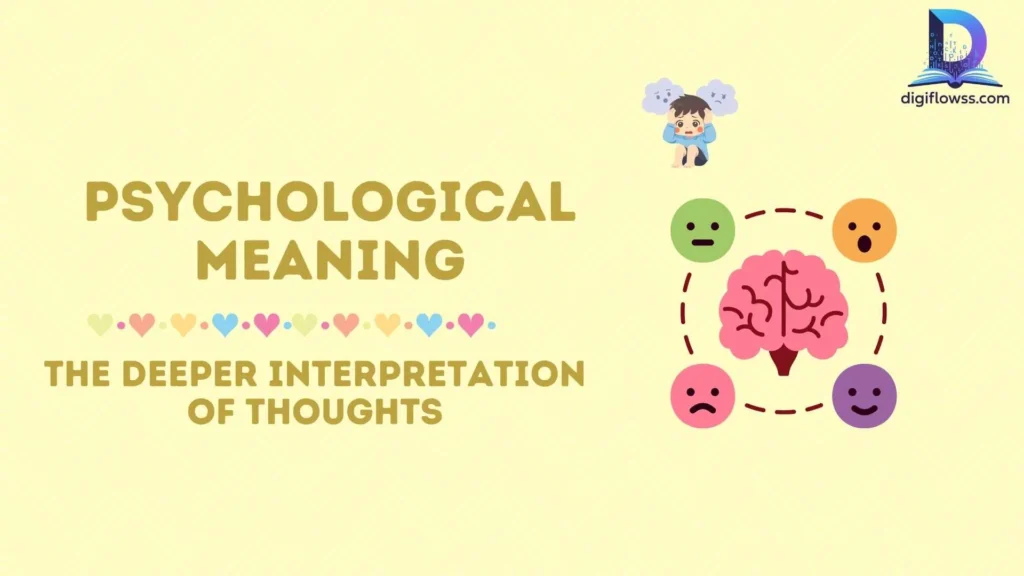
At its core, psychological meaning is the deeper interpretation of thoughts, emotions, words, or behaviors based on how the human mind works.
It goes beyond surface-level understanding. Instead of just seeing what someone does, it helps explain why they do it.
Quick Answer:
Psychological meaning is the hidden or underlying explanation of behavior, thoughts, or emotions based on mental and emotional processes.
Origin & Evolution
The concept comes from the field of psychology, which began developing in the late 19th century. Early thinkers like Freud and Jung explored how unconscious thoughts shape behavior.
Over time, the idea evolved into modern interpretations used in:
- Therapy and counseling
- Social behavior analysis
- Everyday communication
Today, it’s widely used not just in science, but in daily life—from relationships to social media interactions.
Pronunciation
psy·cho·log·i·cal mean·ing
/sahy-kuh-loj-i-kuhl mee-ning/
How to Use “psychological meaning” Correctly in Texts & Chat
While not slang, the phrase psychological meaning is often used when analyzing or explaining behavior in conversations.
When to Use It
Use it when:
- You’re explaining someone’s behavior
- Discussing emotions or reactions
- Analyzing messages or tone
Example:
“That message has a deeper psychological meaning—you’re not just joking.”
Platform-Specific Usage
- WhatsApp / SMS: Casual explanations
- Instagram / TikTok: Used in captions or comments analyzing behavior
- Twitter/X: Often used in threads explaining trends or reactions
- Discord / Reddit: Common in discussions and debates
When NOT to Use It
Avoid in:
- Formal business emails
- Quick chats where simplicity is better
- Situations where it may sound overly analytical
Formatting Tips
- Keep it lowercase in casual text
- Pair with emojis for tone (🤔, 🧠, 😅)
- Avoid overusing—it can sound “too deep”
Real Conversation Examples Using “psychological meaning”
Between Friends
A: “Why did you leave the group chat suddenly?”
B: “Honestly, there’s a psychological meaning behind it—I felt ignored.”
👉 Emotion: Vulnerability and self-awareness
In a Relationship
A: “You always joke when things get serious.”
B: “Yeah… maybe there’s a psychological meaning behind that.”
👉 Emotion: Avoidance and emotional defense
Family Context
Mom: “You keep procrastinating your work.”
You: “There’s probably a psychological meaning—I’m just overwhelmed.”
👉 Emotion: Stress and mental pressure
Work Chat
Colleague: “Why does he always stay quiet in meetings?”
You: “Could be a psychological meaning—maybe he lacks confidence.”
👉 Emotion: Observation and analysis
Gaming / Online Chat
Player 1: “Bro rage quit again 😂”
Player 2: “That’s psychological meaning right there—low patience level.”
👉 Emotion: Humor mixed with insight
Common Mistakes & Misunderstandings
1. Overanalyzing Everything
Not every action has a deep psychological meaning. Sometimes, people are just… tired.
2. Using It to Judge Others
Avoid sounding like you’re diagnosing people. It can come off as arrogant.
3. Confusing Literal vs Psychological Meaning
- Literal: What is said
- Psychological: What is meant emotionally
Generational Differences
- Gen Z: Uses it casually and humorously
- Millennials: Use it thoughtfully in discussions
- Older generations: May see it as overly complex
Cultural Differences
In some cultures, emotional analysis is common. In others, it may feel intrusive.
“psychological meaning” Across Different Platforms & Demographics
Gen Z Usage
- Often used in memes and jokes
- “That has psychological meaning 💀”
Millennials
- Used in deeper conversations and self-reflection
Platform Trends
- TikTok: Viral “psychological facts” content
- Instagram: Caption analysis and emotional storytelling
- Discord: Deep discussions in niche communities
Formality
- Informal to semi-formal
- Not ideal for professional reports unless used academically
Related Slang, Abbreviations & Alternatives
Here are similar or related terms:
- Deep meaning – Hidden emotional layer
- Subtext – Implied meaning behind words
- Emotional context – Feelings behind communication
- Mindset – Mental attitude
- Behavioral pattern – Repeated actions explained psychologically
- Overthinking – Excessive analysis
- Projection – Attributing your feelings to others
- Trigger – Emotional reaction cause
- Self-awareness – Understanding your own thoughts
FAQs:
What is psychological meaning in simple terms?
It’s the deeper explanation behind why someone thinks, feels, or acts a certain way. Instead of focusing on what’s visible, it looks at the mental and emotional reasons underneath.
How is psychological meaning different from literal meaning?
Literal meaning is what is directly said or done. Psychological meaning focuses on the hidden emotions, intentions, or mental processes behind those words or actions.
Why is psychological meaning important in communication?
It helps you understand people better, avoid misunderstandings, and respond more empathetically. It’s especially useful in relationships and emotional conversations.
Can psychological meaning change over time?
Yes. As people grow, heal, or experience new things, the psychological meaning behind their actions can shift significantly.
How do you identify psychological meaning in behavior?
Look at patterns, emotional reactions, tone, and context. Ask yourself: “What might this person be feeling or thinking beneath the surface?”
Conclusion:
Understanding psychological meaning is like unlocking a hidden layer of human behavior. It helps you see beyond words and actions into the real emotions driving them.
In everyday life, this awareness can improve your relationships, communication, and even self-understanding. You start noticing patterns, emotional cues, and subtle signals others might miss.
So next time someone says something that feel off, pause and think what’s the psychological meaning behind it?

Hi, I’m Candy Mark, the voice behind Digiflowss.com, where confusing words get clarity and trending slang finally makes sense.
I write for people who don’t have time for complicated definitions. If a word is blowing up online or showing up in conversations and you’re not 100% sure what it means, I break it down fast, simple, and in a way that actually sticks.