Ever read a sentence like The landlord will furnish the apartment and paused for a second? You’re not alone.
Many English learners and even native speakers sometimes get confused about the exact furnish meaning and how to use it naturally.
In today’s fast moving digital world, clear communication matters more than ever.
Whether you’re chatting, writing emails, or preparing assignments, knowing the correct meaning of words like furnish helps you sound more confident and precise.
This guide is updated for 2026 and designed to give you everything you need in one place. You’ll learn the exact definition, real life examples, common mistakes, and even modern usage trends.
By the end, you won’t just understand furnish you’ll actually use it like a pro.
What Does “Furnish Meaning” Mean?
The furnish meaning is simple:
Quick Answer:
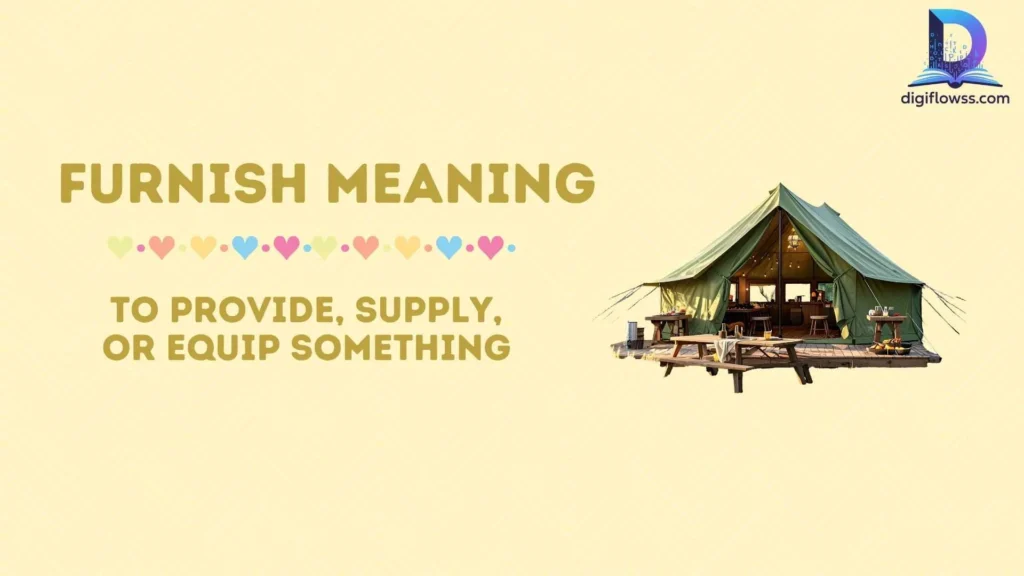
Furnish means to provide, supply, or equip something with what is needed, especially furniture or essential items.
Basic Definition
- To supply or provide something
- To equip a place with furniture
- To give information or details
Origin of the Word
The word furnish comes from Old French “fournir”, which means to supply or complete. Over time, it became widely used in English, especially in contexts related to homes and equipment.
Evolution of Meaning
Originally, furnish mainly referred to providing physical items like furniture. Today, it also includes:
- Providing documents or information
- Supplying resources or tools
Pronunciation
Furnish is pronounced as:
/ˈfɜːr.nɪʃ/ (fur-nish)
How to Use “Furnish Meaning” Correctly in Texts & Chat
Understanding furnish meaning is one thing — using it correctly is where most people struggle.
Correct Context
Use furnish when you want to say:
- You are supplying something specific
- You are equipping a place
- You are providing details or information
Examples of Usage
- Furnish a house
- Furnish evidence
- Furnish a report
Tone & Style
- Slightly formal but widely acceptable
- Common in both spoken and written English
Where You’ll See It
- Emails: “Please furnish the required documents.”
- WhatsApp: “Can you furnish the details?”
- Academic writing: “The study furnishes evidence…”
When NOT to Use It
Avoid using furnish in:
- Very casual slang conversations
- Situations where simpler words work better (like “give” or “send”)
Formatting Tips
- No special capitalization needed
- Works well with professional tone
- Can be paired with neutral emojis 👍 in casual chats
Real Conversation Examples Using “Furnish Meaning”
Between Friends
A: Did you move into your new apartment?
B: Yeah, but I still need to furnish it.
👉 Meaning: B needs to add furniture.
In a Group Chat
A: Can someone furnish the meeting notes?
B: I’ll send them now.
👉 Meaning: Provide information.
Dating Scenario
A: Your place looks amazing!
B: Thanks, I spent months furnishing it.
👉 Meaning: Decorating and equipping the space.
Work Chat
Manager: Please furnish the report by 5 PM.
Employee: Sure, I’m working on it.
👉 Meaning: Submit or provide something important.
Gaming Context
Player 1: We need more resources.
Player 2: I’ll furnish the supplies.
👉 Meaning: Provide necessary items.
Common Mistakes & Misunderstandings
1. Confusing Furnish with Provide
While similar, furnish is more specific. It often implies:
- Supplying something essential
- Equipping completely
2. Overusing It in Casual Speech
Saying “I’ll furnish you the book” sounds unnatural. Better:
✔ “I’ll give you the book”
3. Generational Confusion
- Older generations use furnish more formally
- Gen Z prefers simpler words like “send” or “drop”
4. Regional Differences
In some regions, furnish is mainly used in legal or formal contexts.
“Furnish Meaning” Across Different Platforms & Demographics
Gen Z Usage
- Rare in casual texting
- More common in academic or professional writing
Millennials
- Use it in emails and semi-formal chats
- Comfortable with both formal and casual alternatives
Platforms
- TikTok: Rare
- Instagram: Occasionally in captions
- Discord: Mostly replaced with “give” or “send”
- Email: Very common
Formality Level
- Semi-formal to formal
- Safe for work ✔
Related Slang, Abbreviations & Alternatives
Here are useful alternatives to understand alongside furnish meaning:
| Word | Meaning |
|---|---|
| Provide | Give something |
| Supply | Offer needed items |
| Equip | Prepare with tools |
| Outfit | Provide clothing or gear |
| Deliver | Bring something |
| Send | Transfer something |
| Arrange | Organize or prepare |
| Allocate | Assign resources |
| Present | Give formally |
| Grant | Give permission or item |
FAQs:
What is the exact furnish meaning in English?
Furnish means to supply or provide something necessary. It is commonly used when talking about furniture, resources, or information. For example, furnishing a house means adding all the needed furniture and items.
Can furnish be used in daily conversation?
Yes, but it sounds slightly formal. In casual conversations, people often use simpler words like “give” or “send.” However, furnish is still widely understood and acceptable.
What is a simple sentence using furnish?
A simple example is: “They furnished the office with modern desks.” This shows how furnish is used when providing or equipping something.
Is furnish used in professional writing?
Absolutely. Furnish is very common in business emails, reports, and legal documents. For example: “Please furnish all required documents before the deadline.”
What is the difference between furnish and equip?
Both are similar, but equip focuses more on tools or functionality, while furnish often relates to furniture or general provision.
Conclusion:
Understanding furnish meaning is simpler than it first appears. At its core, it’s all about providing or supplying what’s needed whether that’s furniture, information, or resources.
Once you start noticing it, you’ll see furnish everywhere from emails to academic writing. And now, you know exactly when and how to use it naturally.
The key is balance. Use furnish in the right context, and switch to simpler words when needed. That’s how you sound both smart and natural.
Want to expand your vocabulary even more? Drop your favorite English word in the comments and let’s explore it together!

Hi, I’m Candy Mark, the voice behind Digiflowss.com, where confusing words get clarity and trending slang finally makes sense.
I write for people who don’t have time for complicated definitions. If a word is blowing up online or showing up in conversations and you’re not 100% sure what it means, I break it down fast, simple, and in a way that actually sticks.