Ever seen MBO in a message or business article and thought, wait what does that even mean? You’re not alone.
The term pops up in totally different contexts sometimes in corporate discussions, other times in casual chats and that’s exactly why it confuses so many people.
The mbo meaning isn’t one size fits all.
It can shift depending on where you see it LinkedIn, WhatsApp, or even finance blogs.
And in today’s fast moving digital world, understanding abbreviations like this isn’t just helpful it’s essential.
breaks everything down in plain English.
You’ll learn the different meanings of MBO, how to use it correctly, real life examples, and even the common mistakes people make.
Let’s decode it once and for all.
What Does “MBO” Mean?
MBO has two primary meanings depending on context:
- Business: Management Buyout
- Slang/Texting: Must Be Obeyed (less common, context-specific)
Quick Answer:
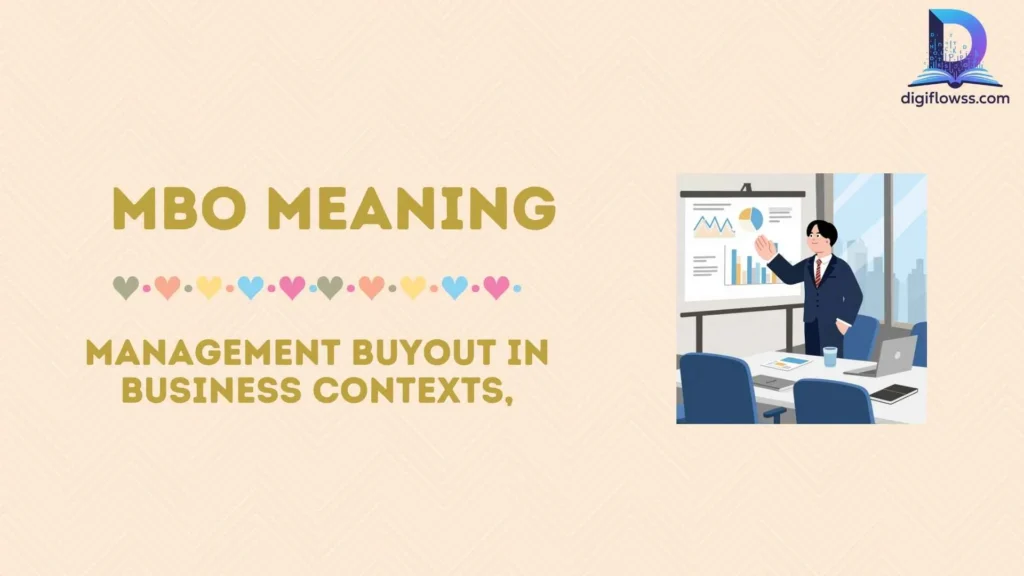
MBO meaning usually refers to Management Buyout in business contexts, where company managers buy the company. In casual texting, it can mean Must Be Obeyed, though this usage is rare.
Origin & Evolution
- Management Buyout (MBO):
Originated in corporate finance during the late 20th century. It became popular as executives sought to take control of companies they managed. - Slang Usage:
The slang version evolved informally in online chats and niche communities, often used humorously or sarcastically.
Pronunciation
- Spoken as individual letters: “Em-Bee-Oh”
How to Use “MBO” Correctly in Texts & Chat
Using mbo meaning correctly depends entirely on context.
1. In Business Conversations
- Used in formal or semi-formal settings
- Example: emails, reports, LinkedIn posts
✔ Correct tone: professional, analytical
❌ Avoid casual slang interpretation here
2. In Casual Texting
- Rare but sometimes used humorously
- Tone can be playful or sarcastic
Platform-Specific Usage
- WhatsApp/SMS: Rare, but possible in jokes
- Instagram/TikTok: Almost never used as slang
- Discord/Reddit: May appear in niche communities
- LinkedIn: Almost always means Management Buyout
When NOT to Use MBO
- In formal writing unless referring to business
- With people unfamiliar with abbreviations
- In sensitive conversations (can confuse tone)
Formatting Tips
- Always uppercase: MBO
- Avoid emojis in business context
- In slang, can be paired with 😄 or 😏 for tone clarity
Real Conversation Examples Using “MBO”
1. Between Colleagues (Business Context)
A: The company might go for an MBO next year.
B: That could give management more control.
👉 Meaning: Refers to a Management Buyout (professional tone)
2. In a Group Chat (Humorous)
Friend 1: You’re bringing snacks, right?
Friend 2: Yes boss 😂 MBO
👉 Meaning: “Must Be Obeyed” used jokingly
3. Dating Chat (Playful Tone)
Person A: Don’t forget our movie night!
Person B: Of course 😏 MBO
👉 Meaning: Playful obedience or teasing tone
4. Family Chat
Mom: Be home by 10.
You: Okay… MBO 😅
👉 Meaning: Light sarcasm mixed with compliance
5. Startup Discussion
Investor: Is this an MBO opportunity?
Founder: Possibly, the management team is interested.
👉 Meaning: Strictly business-related
Common Mistakes & Misunderstandings
1. Mixing Business and Slang Meanings
Using MBO casually in a professional email can confuse readers—or worse, make you look unprofessional.
2. Assuming It’s Widely Known
Unlike LOL or OMG, mbo meaning isn’t universally understood.
👉 Tip: When in doubt, spell it out the first time.
3. Generational Confusion
- Gen Z: May not recognize it at all
- Millennials: Might interpret slang version
- Professionals: Default to business meaning
4. Cultural Differences
In some regions, MBO is only known as a business term.
“MBO” Across Different Platforms & Demographics
Gen Z vs Millennials
- Gen Z: Rarely uses MBO
- Millennials: May use jokingly
- Professionals: Use strictly for finance/business
Platform Trends
- TikTok: Not trending
- Instagram: Rare usage
- LinkedIn: Common in business posts
- Reddit: Seen in finance threads
Formality Level
- Business: ✅ Formal
- Slang: ❌ Informal
Safe for Work?
✔ Yes—only in business context
❌ Slang usage may confuse or seem odd
Related Slang, Abbreviations & Alternatives
Here are similar terms you might encounter:
- M&A – Mergers and Acquisitions
- IPO – Initial Public Offering
- CEO – Chief Executive Officer
- LOL – Laugh Out Loud
- BRB – Be Right Back
- IMO – In My Opinion
- FYI – For Your Information
- BOSS – Sometimes used instead of “MBO” jokingly
- GOAT – Greatest Of All Time
- IDK – I Don’t Know
👉 These terms often overlap in digital communication depending on context.
FAQs:
What does MBO mean in texting?
In texting, mbo meaning can refer to “Must Be Obeyed,” usually used humorously or sarcastically. However, it’s not widely recognized, so context matters a lot.
What is MBO in business?
In business, MBO stands for Management Buyout, where a company’s management team purchases the company, gaining ownership and control.
Is MBO commonly used slang?
No, it’s relatively uncommon compared to popular abbreviations like LOL or OMG. Most people recognize it more in business contexts.
How can I tell which meaning is intended?
Look at the conversation setting. If it’s professional or financial, it means Management Buyout. In casual chats, it may carry a playful slang meaning.
Should I use MBO in professional emails?
Yes—but only when referring to Management Buyout. Avoid slang interpretations in professional communication.
Conclusion:
The mbo meaning might look simple at first glance but context changes everything. In business, it’s a powerful financial term. In casual chats, it can take on a playful, niche meaning.
Understanding when and where to use it gives you a serious communication edge especially in a world full of abbreviations.
If you remember one thing: always read the room or the chat .
Now your turn have you ever seen MBO used in a funny or confusing way? Drop your example and keep the conversation going.

Hi, I’m Alex Mark, the writer and Creator behind digiflowss.com, where meanings aren’t just explained… they’re made easy to understand and actually useful.
I started this platform with one simple goal: to break down words, slang, and expressions in a way that feels clear, fast, and real. No complicated definitions. No textbook vibes. Just straight answers that help you understand what people really mean—online and in real life.